
"Living in dangerous times"
The Case for Underground Shelters in an Increasingly Uncertain World
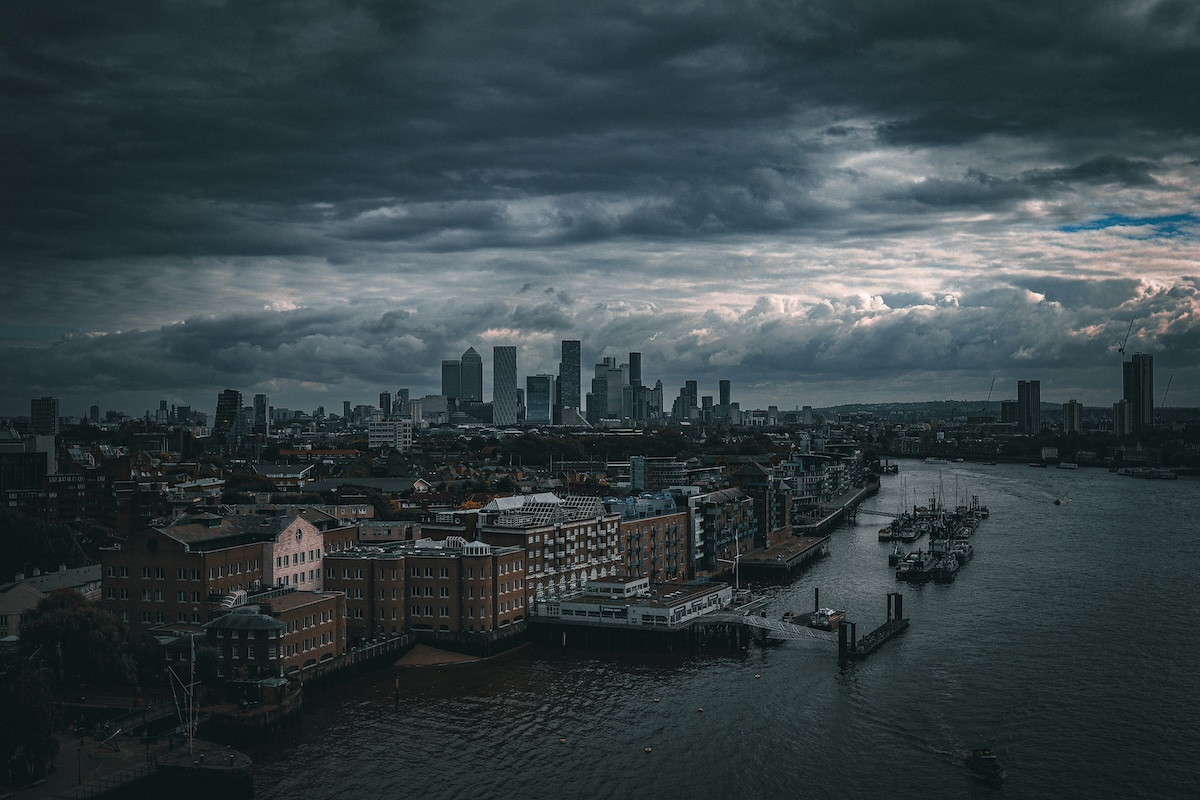
We can all recall a time when the idea of owning a fallout shelter or nuclear bunker was associated with Cold War propaganda or fringe survival culture. Today, the concept is a lot closer to the mainstream. Not as an expression of fear or paranoia, but as a rational response to a global environment that is increasingly fraught.
As governments issue broader security advisories, and analysts warn of compounding global risks, individuals and families are beginning to face a question that feels newly relevant: How do we prepare for a future that feels a lot less predictable than it once did?
A world defined by persistent risk
According to global security analysts and institutions, armed conflict has re-emerged as one of the most significant long-term risks facing humanity. Recent editions of the Global Risks Report place geopolitical conflict right at the top of the list of concerns for the coming decade, reflecting a world in which instability is increasingly normalized.
Unlike previous eras, modern conflicts are rarely straightforward and contained. They spill across borders through economic disruption, energy insecurity, cyber activity, and humanitarian crises in a way which makes even geographically distant populations feel they are at the mercy of events they cannot control.
Hybrid threats and systemic vulnerability
Modern conflict is no longer limited to tanks and missiles. Analysts increasingly focus on hybrid threats - a blend of cyberattacks, disinformation campaigns, sabotage, and covert operations that blur the line between war and peace. Research groups have warned that these tactics deliberately target civilian infrastructure and social cohesion. Attacks on power grids, communications networks, and supply chains are no longer hypothetical - they are a persistent feature of global contention.
This unmistakably creates a sense of ambient risk in which disruption may arrive suddenly and without warning or clear accountability.
Nuclear risk has not disappeared
Nuclear weapons have not been used in conflict since 1945, and yet many experts agree that the underlying risk is growing rather than diminishing. The erosion of arms control frameworks, expansion of nuclear arsenals, and rise in geopolitical tensions are all factors in the increased likelihood of an event. Senior military leaders have described the current period as a “new nuclear age”, one characterized by complexity, unpredictability, and heightened strategic risk. Against this backdrop, preparedness no longer feels extreme. It feels measured.
During the Cold War, governments invested heavily in public fallout shelters and civil defense programs. Over time, as many of these initiatives faded, so did the cultural expectation of personal preparedness. Yet the core logic remains: when systemic risks exist, individuals benefit from layers of protection. Modern preparedness is not about retreating from society; it is about resilience in the face of disruption.
What a modern fallout shelter really is
Modern underground shelters are not those crude concrete boxes many of us first picture when we hear the phrase. Contemporary designs are focused on:
- Radiation and blast protection through state-of-the-art materials and engineering
- Air filtration systems capable of removing airborne particles and contaminants
- Self-sufficiency, including power, water, and waste systems designed for human occupancy
- Human comfort, acknowledging that psychological wellbeing is critical when sheltering for prolonged periods.
This evolution reflects a broader shift: preparedness solutions must be livable rather than merely survivable.
Renewed interest in nuclear bunkers is not a phenomenon driven by panicked headlines. It is simply a reflection of a growing awareness that:
- Global risks are interconnected and harder to predict
- Institutional responses may be delayed or overwhelmed in a worst-case scenario
- Personal preparedness is a great comfort in uncertain circumstances
A new standard for underground sheltering
Companies like Subterranean Spaces Global represent this shift in thinking. Not content to focus on survival, their approach reflects how underground shelters can integrate safely, on engineering excellence, and livability. In reimagining what a nuclear bunker can look and feel like, modern providers challenge outdated stereotypes and make preparedness accessible to a far broader audience; not the hardened preppers of alarmist Hollywood pictures, but families, property owners, and forward-thinking investors.
Readiness is a modern responsibility
Underground shelters are not a prediction of catastrophe. They are an acknowledgment of uncertainty; disaster is not inevitable, but uncertainty has become structural in the present day. The systems we rely on are complex, interdependent, and vulnerable in ways we never used to foresee. And while fallout shelters and nuclear bunkers will never replace governance or global cooperation, they do offer something those systems cannot guarantee: personal resilience.
Why Choose Subterranean Spaces Global?
With over 25 years of experience, Subterranean Spaces Global delivers advanced underground environments for private, commercial and specialist clients worldwide. Our expertise spans from luxury bunkers and asset security to protected spaces for commercial operations and multi-level facilities. We offer bespoke solutions tailored to your specific needs, backed by a legacy of technical excellence and innovative design.
Each project is tailored to the client's site, risk profile and long-term resilience goals, combining hardened structural engineering, specialist life-support systems, secure access, technical infrastructure and refined interior design.

Ready to Build Your Subterranean Space?
Whether you have an idea or a vision to discuss, or a project you are ready to embark on, get in touch.

Quotations are priced based on country and location
SUBTERRANEAN SPACES GLOBAL

LONDON
The Foundry, 77 Fulham Palace Road, London W6 8JA. UK
Tel: +44 203 026 5088

NEW YORK
99 Wall Street 5568, New York, NY 10005. USA
Tel: +1 332 208 0066
LOS ANGELES
2355 Westwood Boulevard #1820 Los Angeles CA 90064-2109. USA
Tel: +1 213 329-3255